
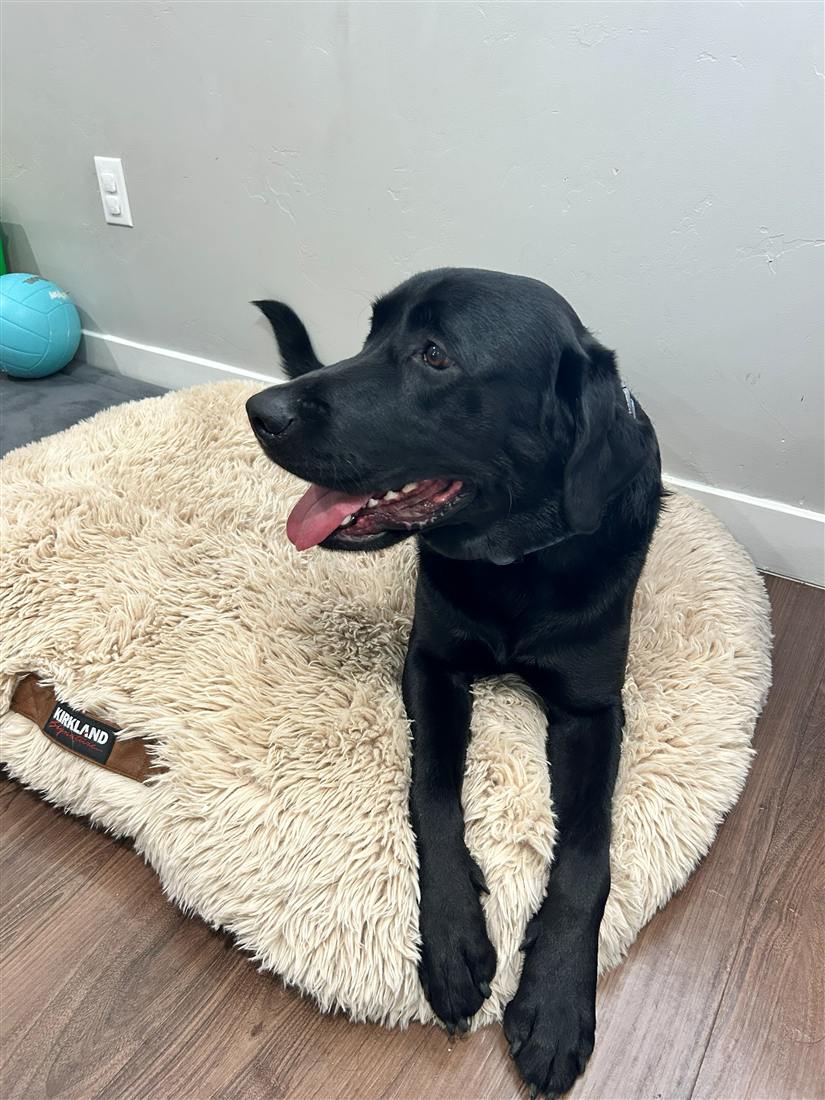
Affection was never the problem
Let's be clear before anything else: this isn't an argument against the couch, the birthday cake, or the ridiculous Halloween costume. Dogs thrive on affection, and I'd never tell a client to love their dog less. The issue isn't spoiling. It's assuming your dog thinks, reasons, and feels guilt the way a person does, because that assumption quietly shapes decisions that don't actually help your dog.
The guilt-and-forgiveness myth
"He knows he did something wrong, just look at that guilty face." That look, ears back, avoiding eye contact, slinking away, isn't guilt. It's appeasement. Your dog is reading your tone, posture, or the state of the living room and predicting that you're about to be upset, so he's trying to defuse it. He's not replaying the decision to get into the trash an hour ago and feeling remorse about it.
That distinction matters because it changes what correction actually teaches. A correction delivered minutes (or hours) after the fact doesn't connect to the behavior in your dog's mind. It just teaches him that you coming home, or you finding a mess, sometimes means something bad is about to happen. That's a worse outcome than the torn-up trash bag.
Comforting fear can grow fear
When a dog is scared, thunder, fireworks, another dog, it's instinctive to want to scoop them up and soothe them with a soft voice and lots of attention. The intention is kind. The effect can backfire, because dogs read our emotional state constantly, and anxious, pitying energy directed at a scared dog often confirms that there's something to be scared of, rather than helping them move past it.
Calm, matter-of-fact confidence from you does more for a fearful dog than sympathy does. You're not withholding comfort. You're modeling the emotional state you actually want them to land in.
No rules, no structure, and why that backfires
Letting a dog make every decision, when to eat, when to demand attention, whether to jump on guests, whether to shove through doorways first, feels generous. In practice, it removes the predictability that dogs actually find calming. A home with clear, consistent expectations functions a lot like a well-run workplace: people (and dogs) relax more under clear direction than they do in a vacuum where everything is negotiable all the time.
Dogs raised without structure don't usually become more confident. They tend to become more anxious, more reactive to change, and more prone to guarding what they've come to see as theirs to control.
A dog with structure and affection is a secure dog. A dog with affection and no structure is often an anxious one.
What dogs actually need from you
- Calm, consistent leadership: not domination, just clear and predictable expectations they can count on.
- Timely corrections: connected to the moment, not delivered after the fact based on how you feel when you find the evidence.
- Boundaries around resources like food, furniture, and attention. Boundaries don't make a dog feel unloved. They make a dog feel secure, because the rules don't change based on mood.
You can still let the dog on the couch. You can still buy the costume. Just don't confuse indulgence with love, or the absence of structure with kindness. Dogs don't need us to be human with them. They need us to be clear.